

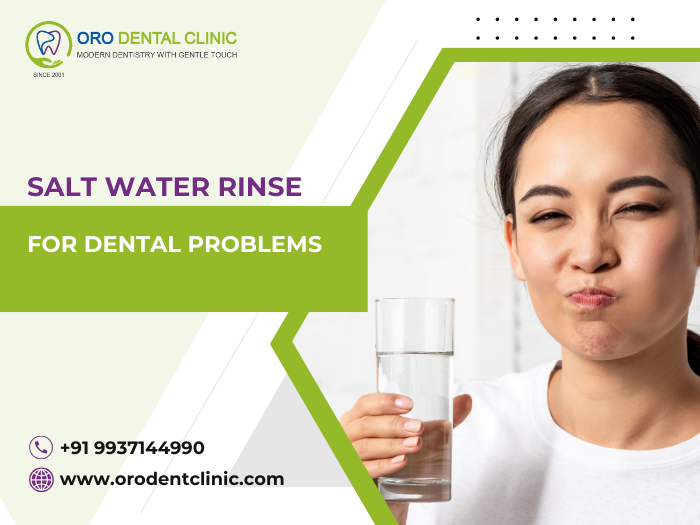
Salt Water Rinse For Dental Problems
Dental Tips
Our kitchen does more than just fill our stomach, it quietly helps us in many ways.
Think about daily cooking. You can use many spices, but without salt, food still feels incomplete. Salt brings balance and comfort, and its role goes beyond the kitchen. For years, it has been used at home to ease small health problems, including issues inside the mouth.
Sore gums, mild tooth pain, or redness near the gums often make people turn to salt water rinses. And there’s a simple reason for that, when used the right way, it truly helps.
As a Dentist in Sambalpur, we often meet people who ask whether salt water rinse really works or if it’s just an old home tip. The answer is simple. Salt water can help, but only when you know when to use it and when you should not depend on it alone.
At Oro Dental Clinic, we strongly believe that small daily care habits matter a lot. A salt water rinse may look very basic, but when done the right way, it supports your mouth quietly and gently.
So let’s understand everything.
Why Salt Water Has a Special Place in Dental Care
Salt isn’t magic. It doesn’t replace dental treatment. But it creates an environment in the mouth where harmful bacteria don’t feel welcome.
Here’s why it works:
- Salt helps reduce swelling
- It gently cleans the mouth
- It supports natural healing
- It soothes irritated tissues
Think of salt water as a calm cleaner, not a strong medicine.
Benefits of Using Salt Water Rinse for Teeth and Gums
Let’s talk about what salt water actually helps with, without exaggeration, without shortcuts.
1. Helps Control Bacteria in the Mouth
Your mouth naturally has bacteria, some good, some not-so-good. When harmful bacteria grow too much, problems start showing up.
Salt water:
- Creates an unfriendly space for harmful bacteria
- Helps slow down bacterial growth
- Keeps the mouth cleaner between brushing
- It doesn’t kill everything instantly, but it helps bring balance.
Friendly Tip: Salt water works best as a support, not a replacement for brushing.
2. Supports Healthier Gums
Red, swollen, or tender gums often mean irritation has started.
Salt water:
- Calms inflamed gum tissue
- Helps reduce mild bleeding
- Supports healing of irritated gums
This is why many dentists, including a Dentist in Sambalpur, suggest salt water after scaling or when gums feel sore.
3. Soothes Toothache Discomfort
Salt water won’t cure a deep cavity, but it can help with temporary discomfort.
It helps by:
- Cleaning around the painful area
- Reducing pressure from mild swelling
- Making the mouth feel fresher
This relief is temporary, but it can make waiting for a dental visit easier.
4. Aids Healing After Tooth Removal
After a tooth extraction, the mouth needs gentle care.
Salt water rinse:
- Keeps the area clean
- Reduces chances of infection
- Supports natural healing
Dentists usually recommend salt water after the first 24 hours, not immediately after extraction.
5. Helps Reduce Bad Breath and Tonsil Stone Build-Up
Bad breath often starts from bacteria sitting quietly in the mouth and throat.
Salt water:
- Flushes out trapped debris
- Reduces bacteria near the throat
- Helps keep the mouth feeling fresher
It’s especially helpful for people who notice bad breath even after brushing.
How to Do a Salt Water Rinse the Right Way
Doing it right matters more than doing it often.
Simple Steps:
- Take a glass of lukewarm water
- Add half a teaspoon of salt
- Mix well until dissolved
- Take a sip, swish gently for 20–30 seconds
- Spit it out
- Repeat 2–3 times
- That’s it. No need to overdo it.
- Pro Tip: Do not swallow salt water. Always spit it out.
When to Use Salt Water, and When It’s Not Enough
- Salt water is helpful, but it has limits.
- Salt Water Helps When:
- Gums feel sore or swollen
- Mild tooth pain is present
- After dental cleaning or extraction (as advised)
- Bad breath feels persistent
Salt Water Is Not Enough When:
- Pain is sharp or constant
- Swelling increases instead of reducing
- There’s pus or severe bleeding
- Tooth pain keeps returning
In such cases, visiting a Dentist in Sambalpur becomes important. Salt water can support healing, but it can’t fix deeper issues alone.
At Oro Dental Clinic, we often explain this clearly: salt water is a helper, not a healer for serious problems.
Common Mistakes People Make with Salt Water Rinse
Let’s clear a few common misunderstandings, because doing it the wrong way can reduce its benefits.
Using very hot water
Hot water can irritate the gums and mouth tissues. Salt water should always be lukewarm, not hot.
Adding too much salt
More salt does not mean better results. Too much salt can dry out the mouth and make irritation worse.
Rinsing too hard or too fast
Swishing aggressively can hurt sensitive gums. Salt water works best when you rinse gently and calmly.
Using salt water instead of visiting a dentist
Salt water can help with comfort, but it cannot treat deeper dental problems. Ignoring professional care can allow issues to grow quietly.
Gentle, simple, and balanced use is the right way to make salt water work for your mouth, not force or overuse.
FAQs
Can salt water replace mouthwash completely?
Salt water is gentle and natural, but it doesn’t fully replace a dentist-recommended mouthwash. It’s great for short-term care, especially during irritation, but long-term oral care may need more support depending on your condition.
How often should I rinse with salt water?
Once or twice a day is enough during discomfort. Using it too often or for too long may dry out the mouth.
Is salt water safe for daily use?
Short-term daily use is fine when there’s a reason. Long-term daily use without dental advice isn’t needed. Balance is the key.
Can children use salt water rinse?
Older children who know how to rinse and spit properly can use it under supervision. For younger kids, it’s better to consult a dentist first.
When Home Care Meets Professional Care
Salt water rinses are like that home remedy everyone trusts, and for good reason. But even trusted habits need direction.
As a Dentist in Sambalpur, we often remind people that simple care works best when paired with the right guidance.
Thinking About Dental Care Beyond Home Remedies?
If salt water rinses are giving temporary comfort but the issue keeps coming back, it’s time for a closer look. At Oro Dental Clinic, the focus stays on understanding the root cause, not rushing decisions.
Whether it’s gum discomfort, tooth sensitivity, or recurring mouth issues, a calm consultation can bring clarity. Sometimes, the best next step is simply asking the right questions.
Your kitchen remedies have their place. And when you need a little more support, we’re right here, ready to help you smile comfortably again.