


Is Single Sitting RCT Safe For Infected Teeth?
Dental Tips
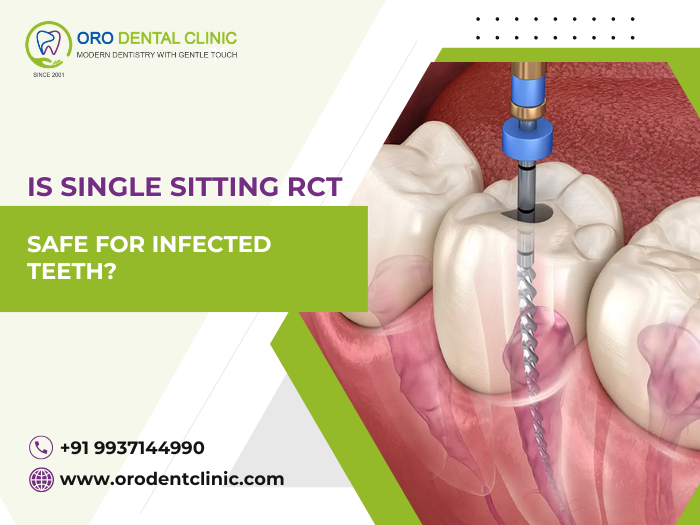
Teeth don’t heal the way skin does. Once the inside of a tooth gets infected, it cannot repair itself on its own. That’s why dental pain doesn’t just “go away” with time, it usually needs proper treatment.
When an infection reaches the middle of a tooth, the word root canal usually comes up. Many people think this treatment always needs multiple visits.
What often surprises them is that, in the right cases, it can be completed in just one planned appointment. This is why people start asking about single sitting RCT in Sambalpur.
At Oro Dental Clinic, we meet people who come in with simple and genuine questions.
- Can it really be done in one visit?
- Is it safe?
- Will it hurt?
Understanding how single sitting root canal treatment works helps clear these doubts and makes the decision feel easier.
Table of Content
- What Exactly Is a Single Sitting RCT?
- How the Process of Single Sitting RCT Works?
- Safety of Single Sitting RCT: Let’s Address This Properly
- 5 Important Things to Know About Single Sitting RCT
- Can an Infected Tooth Really Be Treated in One Day?
- FAQs
- Why Early Treatment Matters More Than the Number of Visits?
- Thinking About Treatment? Let’s Talk
What Exactly Is a Single Sitting RCT?
A root canal treatment is done to save a tooth when the inner pulp, the soft tissue containing nerves and blood vessels, gets infected. Traditionally, this process was spread across multiple visits. One visit to clean, another to medicate, and a final one to seal the tooth.
A single sitting RCT follows the same principles but compresses the entire procedure into one well-planned appointment.
This approach works when:
- The infection is controlled
- There’s no excessive swelling
- The canals can be cleaned thoroughly in one go
It’s not about rushing the process. It’s about precision, experience, and correct case selection.
How the Process of Single Sitting RCT Works?
Understanding the steps often takes away half the anxiety. At Oro Dental Clinic, this is how a single sitting RCT in Sambalpur is usually carried out:
- Detailed Examination
The process starts with a clinical check and X-rays to understand how deep the infection is and how complex the root structure looks. - Local Anaesthesia
The area is numbed properly. Modern techniques focus on comfort, so pain during the procedure is not the goal, it’s something we actively avoid. - Accessing the Tooth
A small opening is made to reach the infected pulp. This allows the dentist to clean the canals from the inside. - Cleaning and Shaping
This is the most critical step. The infected tissue is removed, and the canals are cleaned, shaped, and disinfected thoroughly. - Filling and Sealing
Once cleaned, the canals are filled with a biocompatible material and sealed to prevent reinfection. - Temporary or Final Restoration
Depending on the case, the tooth is either temporarily sealed or prepared for a crown.
All of this happens in one visit, carefully, not rushed.
Safety of Single Sitting RCT: Let’s Address This Properly
This is where most people pause, and rightly so.
Is it safe to complete such an important procedure in one sitting?
The short answer: yes, when done in the right cases and by experienced hands.
Here’s why safety is not compromised:
- Controlled Infection: Single sitting RCT is recommended when the infection can be cleaned completely during the appointment.
- Advanced Tools: Modern rotary instruments and digital imaging allow precise cleaning.
- Reduced Bacterial Exposure: Completing the procedure in one visit actually reduces the chance of bacteria re-entering the canal between appointments.
- Better Patient Compliance: Fewer visits mean fewer chances of delay or missed follow-ups.
Safety depends more on diagnosis than duration. When the case is suitable, doing it in one sitting is not a shortcut, it’s a smart approach.
5 Important Things to Know About Single Sitting RCT
- Not Every Tooth Is a Candidate
Single sitting RCT is not suitable for all teeth. If there is heavy infection, swelling, or pus, the tooth may first need medicine to settle the problem. Once things calm down, the treatment can be completed safely. - Time Taken Can Vary
Even though it is done in one visit, the treatment may take more time than a regular dental procedure. Some teeth have more roots or need extra cleaning, which naturally takes longer. - Post-Treatment Sensitivity Is Normal
After the procedure, you may feel slight pain or tenderness for a day or two. This is normal and usually reduces on its own as the area heals. - Experience Matters
Single sitting RCT needs proper judgment and careful handling. The dentist must clean and seal the tooth correctly in one visit, which comes with experience. - Crown Placement Is Still Important
A tooth becomes weaker after a root canal. A crown helps protect it and allows you to chew normally without worrying about cracks.
Can an Infected Tooth Really Be Treated in One Day?
This is one of the most common questions we hear.
Yes, an infected tooth can be treated in one day if:
- The infection is confined within the canals
- There’s no extensive bone involvement
- Proper disinfection is achievable in one visit
In fact, many people looking for single sitting RCT in Sambalpur choose this option specifically because it reduces repeated exposure, saves time, and offers quicker relief from pain.
FAQs
1. Is it possible to do RCT in a single day?
Yes, it is possible when the tooth condition allows complete cleaning and sealing in one appointment. Case selection is key. Not every tooth qualifies, but many do.
2. Can a completely infected tooth be treated in a single day?
If the infection is limited to the pulp and can be cleaned thoroughly, then yes. However, teeth with severe swelling or abscesses may need staged treatment.
3. Is single sitting RCT painful?
During the procedure, no. After treatment, mild soreness can occur for a short period, which is a normal healing response.
4. How much does it cost?
The cost varies based on tooth position, complexity, and whether a crown is required later. A proper examination gives clarity rather than assumptions.
5. What makes a single sitting RCT different from multiple visits?
The steps are similar. The difference lies in completing cleaning, disinfection, and sealing in one well-managed appointment instead of spacing it out.
Why Early Treatment Matters More Than the Number of Visits?
Infected teeth don’t heal on their own. Delaying treatment often turns a manageable issue into a complicated one. Whether done in one sitting or multiple, the goal remains the same, saving the natural tooth and stopping the infection.
What matters most is timing, diagnosis, and execution.
Thinking About Treatment? Let’s Talk
If you’ve been dealing with dental pain, sensitivity, or infection and are wondering whether single sitting RCT in Sambalpur is right for you, a proper consultation makes all the difference. At Oro Dental Clinic, the focus stays on understanding the tooth first and recommending what genuinely suits the condition, not what sounds fastest.
Reach out, ask questions, and get clarity before the discomfort decides your schedule for you. Sometimes, one well-planned visit really can change how you feel about dental treatments altogether.