


Can Gum Problems Cause Tooth Loss?
Dental Tips
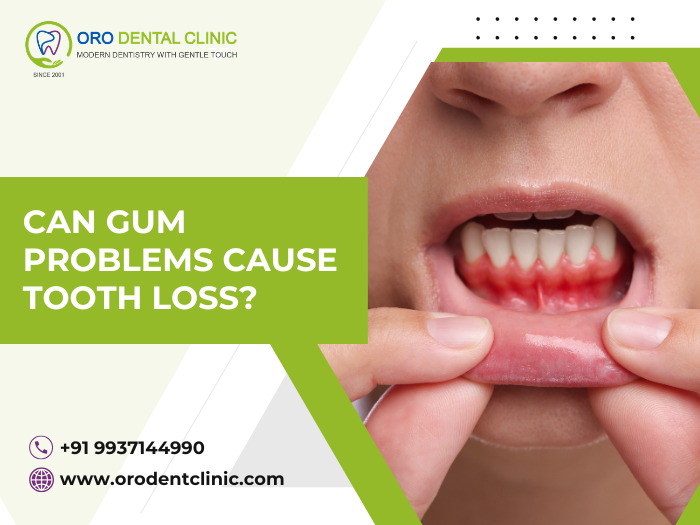
Tooth loss doesn’t happen overnight. It’s usually the last scene of a story that has been running quietly in the background for months, sometimes even years. Before a tooth becomes loose or falls out, the gums have often been struggling silently.
These signs seem small, so they are often ignored. But unhealthy gums can slowly weaken the support around your teeth, and that is where the real risk begins.
3 Idiots Said “All Is Well”… But Is It Really?
In the movie, saying those words made everything feel calmer. Fear reduced. Stress felt lighter.
But when it comes to gum health, repeating “all is well” does not stop infection. It does not repair bone. It does not tighten a loose tooth.
At Oro Dental Clinic, we often see people who ignored bleeding gums for months because it didn’t hurt much. They thought it was normal. They thought it would settle on its own. And by the time they visit, the gums have already weakened the support around the teeth and hence they often end up coming to us for bleeding gums treatment in Sambalpur.
Can Gum Problems Cause Tooth Loss?
This is the most important part.
Your teeth are not just sitting inside the mouth like stones placed in mud. They are supported and held firmly in place by a strong system made up of:
1. Gums
2. Bone
3. Ligaments
These three parts work together like a support team. If one weakens, the whole structure becomes unstable.
When the gums become unhealthy, the support system slowly starts breaking down. It doesn’t happen in one day. It happens step by step.
Let’s understand how.
1. Gingivitis (Early Gum Disease)
This is the starting stage of gum trouble.
At this point, the damage is only on the surface level.
You may notice:
1. Bleeding while brushing
2. Red or swollen gums
3. Mild bad breath
4. Slight tenderness in the gum area
At this stage, the teeth are still stable because the bone underneath is not yet affected. However, if gingivitis is ignored and plaque continues to build up, bacteria begin to travel deeper below the gum line.
Gingivitis is completely reversible with proper cleaning, good brushing habits, and professional care.
2. Periodontitis (Advanced Gum Disease)
Now this is serious.
If gingivitis is not treated on time, the infection spreads deeper into the tissues supporting the teeth. Bacteria move below the gum line and start damaging:
1. Gum tissue
2. Supporting bone
This is the stage where permanent damage can begin.
When the bone around the teeth starts shrinking, the teeth lose their strong foundation. Think of it like a building losing its base support, it may stand for some time, but it becomes weak.
Signs include:
1. Gums pulling away from teeth
2. Pus between teeth
3. Persistent bad breath
4. Loose or shifting teeth
5. Bad taste in the mouth
Once bone loss begins, the tooth becomes unstable. If the infection continues without treatment, the tooth may eventually fall out or need to be removed.
3. Bone Loss Around Teeth
Your teeth depend heavily on the jawbone for stability.
Chronic gum infection slowly destroys this bone. The process is usually painless in the beginning, which is why many people don’t realise what is happening.
There may be no major discomfort at first. No sharp pain. No dramatic symptoms.
By the time you notice that a tooth feels slightly loose, a significant amount of bone may already be lost.
This silent bone destruction is one of the biggest reasons gum problems lead to tooth loss.
4. Deep Gum Pockets
When gum infection continues, the gums begin to separate from the teeth. This creates small spaces between the tooth and gum, called gum pockets.
These pockets become ideal hiding places for food particles and bacteria.
Over time:
1. Infection increases
2. Pockets become deeper
3. Bone reduces further
4. Tooth stability decreases
The deeper the pocket, the harder it becomes to clean with normal brushing. Without professional treatment, the infection keeps progressing, increasing the risk of tooth loss.
5. Gum Abscess
Sometimes the infection becomes sudden and more aggressive.
You may see:
1. Swelling on the gum
2. Severe throbbing pain
3. Pus discharge
4. Difficulty chewing
A gum abscess is not just uncomfortable; it is a sign of active infection. If not treated quickly, it can damage surrounding tissues and bone rapidly, putting the tooth at serious risk.
6. Receding Gums
When gums slowly shrink away from the teeth, the tooth roots become exposed.
This can cause:
1. Increased sensitivity to hot and cold
2. Higher risk of infection
3. Gradual reduction in support
Receding gums may develop slowly over the years due to gum disease, aggressive brushing, or other habits. As more root surface becomes exposed and bone is reduced underneath, the tooth may start feeling loose.
Over time, this gradual loss of support can contribute to tooth mobility and eventually tooth loss if not managed properly.
For individuals experiencing any of the above problems, seeking bleeding gums treatment in Sambalpur at Oro Dental Clinic can help address the problem early before it progresses into more serious gum disease.
Habits That Create Room for Tooth Loss
Tooth loss is not always sudden. Many times, it becomes possible because of habits we repeat daily without realizing their long-term impact. These habits slowly irritate the gums, increase infection risk, and weaken the support around the teeth.
Let’s look at some common ones.
1. Using Toothpicks Frequently
Using a toothpick gently once in a while is fine, but pushing it forcefully between teeth can injure the gums. Repeated trauma can create small gaps, push bacteria deeper, and weaken gum attachment over time.
2. Brushing Too Hard
Brushing with too much pressure does not clean better; it damages the gums. Hard brushing can cause gum recession, expose roots, and make teeth more sensitive and vulnerable.
3. Ignoring Bleeding Gums
Bleeding while brushing is not normal. It is usually an early sign of gum inflammation. When ignored, the infection can spread deeper, affecting the bone that holds the teeth in place.
4. Smoking
Smoking reduces blood flow to the gums, making it harder for them to heal and fight infection. Gum disease often progresses faster in smokers, sometimes without obvious warning signs.
5. Skipping Professional Cleaning
Plaque turns into hard tartar over time, and tartar cannot be removed at home. Without regular professional cleaning, bacteria continue to irritate the gums, increasing the risk of gum disease and tooth loosening.
Small habits may look harmless, but over months and years, they can slowly create conditions where tooth loss becomes more likely.
Your Gums Deserve Attention
Your teeth stay strong only when your gums are healthy and stable. If bleeding, swelling, or mild loosening is ignored for too long, the support around the teeth gradually weakens and can increase the risk of tooth loss.
At Oro Dental Clinic, we focus on identifying gum problems early and providing the right Bleeding Gums Treatment in Sambalpur before the damage becomes serious.
Taking timely care of your gums can protect your natural teeth for many years.